

Construction Loans in Charleston, SC
Building in Cane Bay, Nexton, or on a Johns Island lot starts with one decision most buyers get wrong: one-time-close versus two-close. Pick the one-time-close and you lock your construction loan and your permanent mortgage at a single closing, with one set of costs and one approval. A veteran-owned broker who finances Lowcountry builds walks you through draws, the as-completed appraisal, and your builder before you sign a contract.
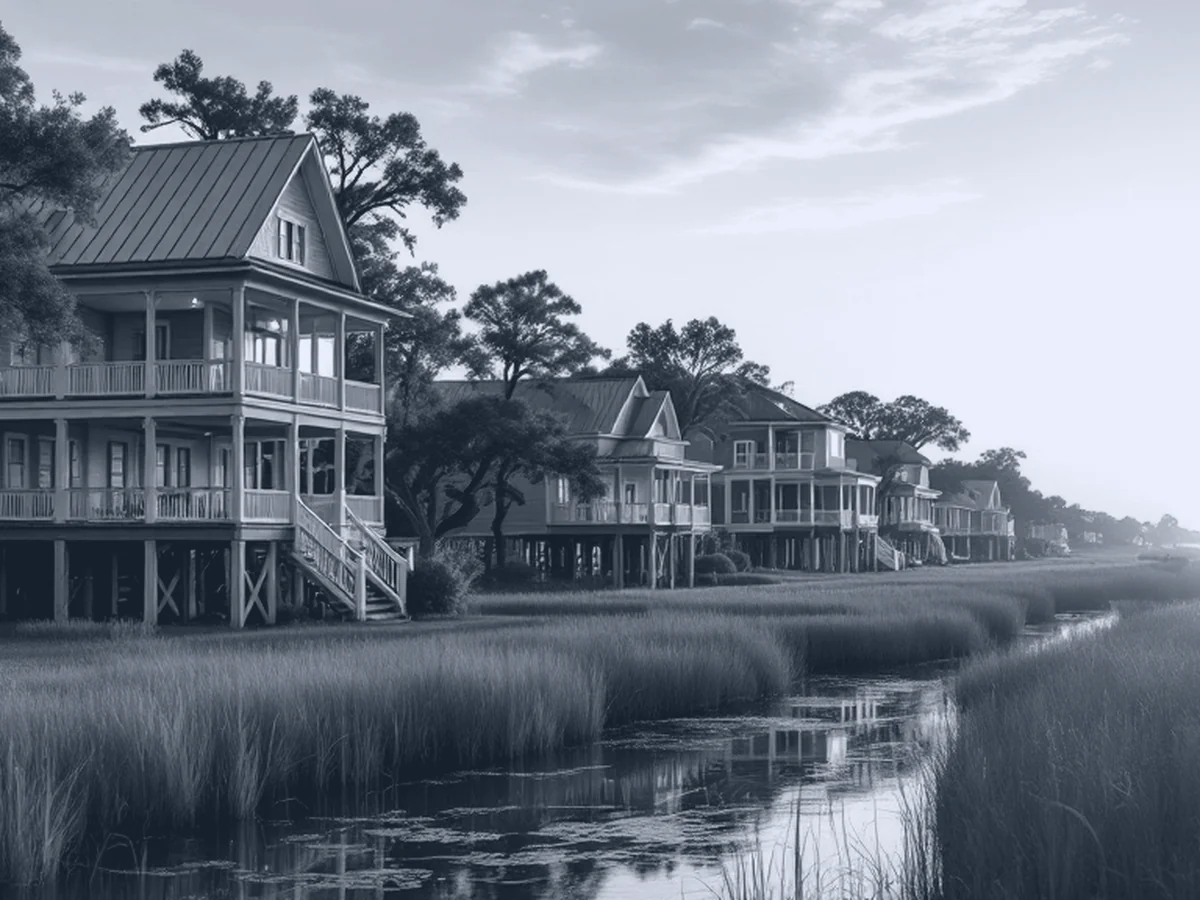
One-time-close vs two-close: the choice that decides your costs
A construction loan funds the building of a home that does not exist yet, then either becomes your mortgage or gets paid off by one. Everything about your build hinges on which of two structures you choose, so start here.
A one-time-close (construction-to-permanent) loan wraps the construction loan and the permanent mortgage into a single loan with one closing, one application, and one set of closing costs. You qualify once, up front, for both phases. When the home is finished the loan simply converts to your permanent mortgage; there is no second approval, no second appraisal, and no second round of fees. For most buyers building a primary home this is the option you want, because it removes the biggest risk of the two-close path.
A two-close loan is exactly what it sounds like: you take a short-term construction loan to build, then a few months to a year later you close a separate permanent loan (a refinance) to pay it off. That means a second application, a second appraisal, a second set of closing costs, and a requalification at the end, when your income, credit, or rates may have moved. Two-close has its place (some builders, some lot situations, some borrowers requalifying intentionally), but you should choose it on purpose, not stumble into it.
As a veteran-owned broker, Home Loans Inc shops your construction file across a wholesale lender network on one application instead of pitching a single bank’s program. That matters more on construction than on a standard purchase, because far fewer lenders offer true one-time-close, and their builder rules and draw schedules vary widely.
How draws and construction-phase interest actually work
A construction loan does not hand your builder the full amount on day one. The money is released in stages, called draws, as the home gets built, and you only pay interest on what has actually been disbursed. Understanding this is the difference between a build that stays on budget and one that surprises you.
Draws follow completed work
Funds release on a schedule tied to milestones: foundation, framing, dry-in, mechanicals, finishes, completion. Before each draw, the lender orders an inspection to confirm that stage is genuinely done. The builder is paid for work finished, not work promised.
You pay interest only on what is drawn
If your loan is approved for a larger amount but only the foundation draw has funded, interest accrues on that smaller balance, not the full commitment. Your construction-phase payments start low and rise as more of the loan is disbursed.
Interest-only during the build
Through construction you typically make interest-only payments on the drawn balance. Once the home is complete and a one-time-close loan converts to permanent financing, you begin normal principal-and-interest payments on the full mortgage.
Your rate is set up front on a one-time-close
With a one-time-close, both the construction-phase terms and the permanent mortgage are set at your single closing, so you are not exposed to wherever rates land a year later. On a two-close, the permanent rate is unknown until you requalify at the end.
A contingency reserve is built in
Good construction budgets include a contingency line for the overruns that happen on almost every build. We help structure that reserve into the loan so a change order does not stall your draws.
The final draw needs a clean finish
The last draw releases after the certificate of occupancy and final inspection. We line up that paperwork early so your conversion to permanent financing is not held up at the closing table.

We finance new builds across the Lowcountry every week.
Construction loan types available in the Lowcountry
Not every construction loan is the same, and the program you qualify for changes your down payment, your builder requirements, and whether you get a true one-time-close. Here are the routes we run for Charleston-area builds.
Conventional construction-to-perm
The workhorse one-time-close for most buyers. Build and permanent mortgage in a single closing, conventional underwriting, and broad builder eligibility. We structure the draw schedule and the as-completed appraisal up front.
Conventional loans →VA one-time-close
For eligible veterans and service members: build with zero down and no monthly mortgage insurance, all in one closing, with the VA appraisal and Minimum Property Requirements applied to the plans and specs. A strong fit near Joint Base Charleston.
VA OTC details →FHA construction options
For buyers who need a lower down payment or more flexible credit, FHA construction financing can build a primary home with the same draw-and-inspect mechanics. Builder approval and documentation standards are strict, and we screen them before you commit.
Lower down paymentTwo-close construction then refinance
When a one-time-close does not fit your builder or timeline, we run a short-term construction loan and then refinance into the permanent mortgage. You requalify at the end, so we plan that exit before you break ground.
Plan the exitYour builder gets underwritten too
On a construction loan the lender is approving more than you; it is approving the company that will build your home and the contract you sign with them. This is where Lowcountry deals most often go sideways, and it is the part a local broker catches before you are committed.
A licensed, approved builder
In South Carolina a residential builder must be licensed through the LLR Residential Builders Commission for any project over $5,000, carry the required $10,000 surety bond, and hold proper insurance. The lender vets the builder’s license, experience, financials, and references. We confirm your builder qualifies before the loan, not during it.
A fixed-price construction contract
Lenders want a clear, signed contract with a defined scope, a fixed or guaranteed-maximum price, and a draw schedule that matches the build. A loose cost-plus arrangement with no ceiling is where overruns hide. We review the contract against the loan budget.
A builder warranty
Most construction programs require a builder warranty on the finished home. We make sure the warranty your builder offers meets the program’s standard so the final draw and conversion are not held up.
The cost breakdown and budget
Your builder provides a line-item cost breakdown, plans, a plot plan, and spec sheets. These feed both the loan budget and the appraisal. The more detailed they are, the cleaner your approval and your value come back.
The plans-and-specs appraisal on a to-be-built home
An appraiser cannot walk through a house that does not exist, so a construction appraisal is done subject to plans and specifications. The appraiser studies your builder’s blueprints, the spec sheet listing the finishes and materials, the cost breakdown, and the lot, then estimates what the finished home will be worth by comparing it to similar completed homes that recently sold nearby. This is the as-completed value.
That number matters because your loan is generally based on the lesser of total project cost (land plus construction) or the as-completed appraised value. If the appraisal comes in below cost, you cover the gap in cash or revise the plan, so getting the comparables and the spec detail right up front protects your buying power.
This is exactly where building in Charleston’s fast-growing suburbs cuts both ways. In master-planned communities like Cane Bay Plantation, Nexton, Carnes Crossroads, and The Ponds, recent closed sales of comparable new homes are plentiful, which helps the as-completed value hold. On a one-off custom build on a Johns Island, Wadmalaw, or rural Dorchester County lot, comparables are thinner, and a vague spec sheet is far more likely to drag the value down. We coach you and your builder on the documentation that defends your number before the appraiser is ordered.
Rolling lot and land financing into your construction loan
You cannot build until you own the dirt, and a construction loan can handle the lot for you instead of forcing a separate land loan. How that works depends on where you stand today.
Buying the lot with the build
If you have found a lot but not bought it, a one-time-close can finance the land purchase and the construction together at a single closing, so you are not juggling a land loan and a construction loan with two payments and two sets of terms.
You already own the lot
If you bought the lot earlier, its value typically counts toward your equity in the project, which can reduce or even cover your down payment. Land you have held and paid down can be one of the most powerful inputs on a construction file.
Lot due diligence in the Lowcountry
Before we lend on the land we look at the realities that decide whether a Lowcountry lot is even buildable: the FEMA flood zone and required base flood elevation, septic versus sewer and perc results on rural Berkeley and Dorchester parcels, wetlands setbacks, and utility access. A cheap lot you cannot build on is no bargain.
Talk to a Charleston construction loan specialist
Home Loans Inc: Jason Sharon, Mortgage Broker
2557 Ashley Phosphate Rd, North Charleston, SC 29418
Timelines, contingencies, and the risks worth pricing in
A construction loan carries risks a finished-home purchase does not, and the buyers who come through it cleanly are the ones who planned for them up front. Here is what we watch on Lowcountry builds.
Cost overruns
Material and labor prices move, and almost every build runs into something unbudgeted. A contingency reserve inside the loan absorbs this. Without one, an overrun becomes cash out of your pocket mid-build, or a stalled draw.
Change orders
Every time you change the plan after the budget is set, it can shift the cost, the appraisal, and the draw schedule. We help you understand how a mid-build upgrade flows through the loan before you authorize it.
Build timelines and rate locks
Lowcountry builds commonly run 8 to 14 months, and permitting in Berkeley and Dorchester counties can add time as those areas grow faster than services keep up. A one-time-close removes the end-of-build rate risk that a two-close leaves open.
Weather and the build calendar
Coastal storm season and a wet spring can push a Lowcountry schedule. We build realistic timelines into the loan so an expected delay does not trigger a problem.
Builder delays or trouble
If a builder falls behind or runs into financial trouble mid-project, draws and inspections are your protection, since money releases only against completed, verified work. Vetting the builder up front is the best defense.
The appraisal gap
If the as-completed value lands below cost, you cover the difference. We pressure-test the budget against real local comps early so this surfaces before you break ground, not after.
Who a Charleston construction loan fits
Building is not for every buyer, but for the right one it is the only way to get the home they actually want. After 8+ years originating across this metro, these are the Lowcountry buyers we see build most.
Buyers in the Berkeley and Dorchester growth corridor
The Cane Bay, Nexton, Carnes Crossroads, and Summerville corridor is where most Charleston-area new construction is happening, with Berkeley County adding roughly 8,500 residents a year. Production builders here often have their own lender, but a one-time-close lets you compare and keep options open.
Custom-home builders on their own lot
If you want a one-off custom home on Johns Island, Wadmalaw, rural Dorchester, or a Mount Pleasant infill lot, a construction loan is usually the only path, since there is no finished home to buy. This is where the as-completed appraisal and a tight spec sheet matter most.
Veterans building near the bases
Eligible veterans and active-duty members near Joint Base Charleston can build with a VA one-time-close, zero down and no monthly mortgage insurance. We confirm entitlement and apply VA MPRs to the plans before you sign a builder contract.
Construction loan vs renovation loan: which one you need
People mix these up constantly, and choosing wrong wastes weeks. A construction loan builds a brand-new home from the ground up on a lot, financing land and construction and converting to a permanent mortgage. A renovation loan buys (or refinances) an existing home and folds the cost of repairs or remodeling into one loan, with the amount based on the home’s value after the work is done.
The line is simple: if the structure does not exist yet, you need a construction loan. If you are improving a home that already stands, whether it is an Avondale bungalow in West Ashley or a dated ranch in Summerville, you need a renovation loan. We run both, and if you are weighing a tear-down against a major remodel we will tell you honestly which loan and which path actually pencils for your property.
Why Lowcountry buyers choose Home Loans Inc to build
Jason Sharon founded Home Loans Inc in 2018 after serving as a nuclear engineer in the U.S. Navy, a background that shows up as precision on every construction file, where the budget, the draw schedule, and the appraisal all have to line up. He holds NMLS #1281448 (company NMLS #1728740) and has spent 8+ years originating loans across the Charleston metro, so he knows which builders and which lots clear underwriting and which create problems.
Because we are a veteran-owned broker and not a single bank, your construction file is shopped across a wholesale lender network on one application, which matters because true one-time-close programs are scarce and their builder and draw rules differ sharply. Charleston-area clients have left 430+ reviews at a 5.0 rating, and we are BBB A+ accredited. You will work with a veteran-owned broker, not a call center.
Construction loans in Charleston, frequently asked
Rated 5.0 by the families we serve.
Jason knows his stuff! We highly recommend him for your mortgage needs! He responds timely, provides information you didn't know you needed, puts the client needs first, and makes common sense adjustments throughout the entire process.
Jason and his team did an amazing job for me. They communicated often and made the entire mortgage process smooth and efficient. I can genuinely say that they are honest, trustworthy and strive to provide the best service possible to their clients.
Jason has been awesome since the beginning. He has been communicative, professional, KNOWLEDGEABLE, and honest. I am very happy with all my services so far, and I recommend UWM!